Cutler Commentary
Cutler Investment Group 2026 Market Outlook
January 12, 2026
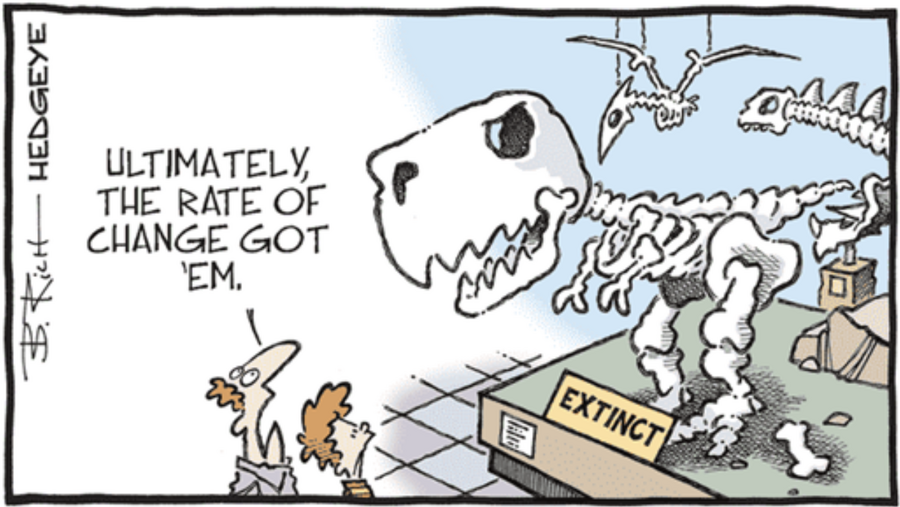
"Intelligence is the ability to adapt to change." - Stephen Hawking
"The secret of change is to focus all of your energy not on fighting the old, but on building the new." - Socrates
“Growth and comfort do not co-exist.” - Ginni Rommetti, former IBM CEO
This past year was one of transformation. Perhaps the biggest change occurred in the political realm, with President Trump pursuing a policy agenda unlike any in the past century. Tariffs dominated headlines, until they didn’t. The government shutdown dominated headlines, until it did not. Investors able to be comfortable being uncomfortable were the most successful this past year, as persistence ultimately ruled the day and markets once again had a banner year.
Perhaps much of the change in our society, whether we are aware of it directly or not, is being driven by Artificial Intelligence. Since 2022, AI has contributed an estimated $250 billion to US GDP. The estimates of capital investment through 2027? An astronomical $2.1 trillion1. This rapid buildout is similar in scale (inflation adjusted) to historical technological transformations of the past such as the railroad or telecom buildouts. The US economy has remade itself time and time again in response to technological changes, and we are in the midst of decidedly doing so at the moment.
With such a grand scale of technological and societal change, investors cannot be blamed for feeling uneasy. And yet, as of December 31st, the major indexes had finished markedly higher. The S&P 500, the broad measure of the US economy, finished 17.88% higher. Other than the down market in 2022, this 17.88% return represented the lowest year since 2019. We have truly had a remarkable run in US stocks. With so much investment being made in the US economy, earnings growth last year was nearly as strong, with estimates around 12%. What goes up, does not necessarily need to go down, and our 2026 outlook supports continued market participation. But first we must address the other big investment change in 2025- diversification.
For much of the past decade, investors have been prone to concentrate portfolios in US technology stocks. Today’s US investors are often sitting on Magnificent 7 positions (Apple, Alphabet, Amazon, META, Microsoft, NVIDIA, Tesla) with significant gains that make selling these positions unappealing for tax reasons. Yet, momentum for many of the Mag 7 waned in 2025. Yes, NVIDIA continues to be the most important stock in the world, now representing 7.4% of the S&P 500 (which once again had a remarkable year with a 39% return). Google (Alphabet) also rallied on the success of their Gemini AI tool. But looking at the other Mag 7 stocks, the returns were less impressive. The market is broadening; and this is an opportunity for diversification to add value to investor portfolios. The MSCI Emerging Markets index led the way with a 34.36% return last year! The MSCI Developed Market index? Also, up an impressive 31%. In the wake of global uncertainty, safe haven assets also outperformed. The Barclay’s Aggregate Bond index was up 7.4% in 2025. Gold had its best year since 1979, hitting 50 all-time highs and finishing up 65%. Clearly, the landscape for investors has changed. The story is no longer just about technology.
And yet, as we look ahead to 2026, the story remains mostly about technology. AI is booming, and with this boom comes risk. NVIDIA may be the most important stock to watch, as broader economic success may be predicated on the success of this company. However, as one looks down the road it seems apparent for AI to be successful, it must result in products that can be applied broadly across the economic spectrum. All businesses will need to see productivity gains, implying that the current investment cycle will lead to gains for companies beyond the current winners. How will automakers, banks, and pharmaceutical companies apply this new technology? How can a utility company be more efficient, or a construction company better manage cash flows? These questions represent the true promise of AI, and if the current technological revolution is successful, the benefits of this change will be widespread.
2026 may represent more change in this ever-changing landscape. Our investment outlook remains positive, yet cautious. The typical “midterm election” year stock drawdown is 18% (versus 13% in other years, and 19% in 2025). The risk of recession, with the Fed in a rate-cutting cycle and trillions of investment, remains low. Tax refunds may support consumer spending, while the jobs market remains weak but stable. Overall, while risks always remain, we believe investors should be similarly positioned as 2025. As we all learn to embrace change, certain investment truths remain. Diversify. Broaden exposures. Keep an eye on risk, and maintain a bias of positivity.
1 Vanguard economic and market outlook for 2026
Past performance is not indicative of future results. Different types of investments involve varying degrees of risk, and there can be no assurance that any specific investment or strategy will be profitable or suitable for a particular investor's financial situation or risk tolerance. Investing involves risk, including loss of principal. You cannot invest directly in an index. Asset allocation and portfolio diversification cannot assure or guarantee better performance and cannot eliminate the risk of investment losses. Source: Morningstar.
The S&P 500 Index is widely regarded as the best single gauge of large-cap U.S. equities. The index includes 500 leading companies and captures approximately 80% coverage of available market capitalization.
The Barclay’s Aggregate Bond Index (Taxable Bond) is a broad base, market capitalization weighted bond market index
representing intermediate term investment grade bonds traded in the United States.
The US Large Value Index measures the performance of US large-cap stocks with relatively low prices given anticipated per-share earnings, book value, cash flow, sales and dividends. This Index does not incorporate Environmental, Social, or Governance (ESG) criteria.
The US Large Growth Index measures the performance of US large-cap stocks that are expected to grow at a faster pace than the rest of the market as measured by forward earnings, historical earnings, book value, cash flow and sales. This Index does not incorporate Environmental, Social, or Governance (ESG) criteria..
All opinions and data included in this commentary are as of December 31, 2025 and are subject to change. The opinions and views expressed herein are of Cutler Investment Counsel, LLC and are not intended to be a forecast of future events, a guarantee of future results or investment advice. This report is provided for informational purposes only and should not be considered a recommendation or solicitation to purchase securities. This information should not be used as the sole basis to make any investment decision. The statistics have been obtained from sources believed to be reliable, but the accuracy and completeness of this information cannot be guaranteed. Neither Cutler Investment Counsel, LLC nor its information providers are responsible for any damages or losses arising from any use of this information.
CATEGORIES

Disclaimer
These blogs are provided for informational purposes only and represent Cutler Investment Group’s (“Cutler”) views as of the date of posting. Such views are subject to change at any point without notice. The information in the blogs should not be considered investment advice or a recommendation to buy or sell any types of securities. Some of the information provided has been obtained from third party sources believed to be reliable but such information is not guaranteed. Cutler has not taken into account the investment objectives, financial situation or particular needs of any individual investor. There is a risk of loss from an investment in securities, including the risk of loss of principal. Different types of investments involve varying degrees of risk, and there can be no assurance that any specific investment will be profitable or suitable for a particular investor's financial situation or risk tolerance. Any forward looking statements or forecasts are based on assumptions and actual results are expected to vary. No reliance should be placed on, and no guarantee should be assumed from, any such statements or forecasts when making any investment decision.